Friday, 12 December 2014

Thursday, 11 December 2014
Screen Shots Of The Documentary Step By Step

The software I am using for this is Premiere Pro, along the lines of After Effects as well. This program was easy to use for editing and for sound. It took me two days to finish editing my footage with the program.

To start of with, I placed down the audio of the film and then lined up the footage over, making sure it all synced in. I then placed the footage on top, most of them were archive pictures so I made sure they would fit in a part of a conversation.

Finally, after placing the footage on top of the audio, I made sure each one appeared in a dramatic and slow way, by using the pen tool and made each picture fade in and fade out, originally I was going to add music to the edit but then changed my mind as the music I used was distracting from from story line. When it came to ending, I cut out a small second of audio and left it till the end to give a finishing dramatic end.
Recce Report
Cousin's house (Optional)
Looking upon the house, it was a spacious set, there were so many ways where I could put the camera and begin shooting. Some of the ideas I had were to shoot the couple whilst they were sitting on a large sofa or on a dining table or even outside on a wooden table if the weather was nice. Since the the house itself is big, I can get unique camera shots from either side of them.
Pros:
My House
As I live in the area, I know exactly where to shoot, the lighting may not be the best but with some lights on it may help. It is quite a small space to shoot but it can fit all of the crew in. Sofa in the living room will be the main sitting area for the two people who will be interviewed.


Garden (Cousin's House - Optional)
If the weather is nice and there isn't too much wind, it would be a great look to the film. Showing how comfortable the couple are together and it gives an in depth feel and look of what the couple likes. Not to mention it will also give a calm and satisfying touch on the sounds and looks, depending on the weather of course.
Pros:
Looking upon the house, it was a spacious set, there were so many ways where I could put the camera and begin shooting. Some of the ideas I had were to shoot the couple whilst they were sitting on a large sofa or on a dining table or even outside on a wooden table if the weather was nice. Since the the house itself is big, I can get unique camera shots from either side of them.
Pros:
- Spacious
- Quiet
- Comfortable
Cons:
- Hard to get to
- The owners of the house are busy
- Children
My House
As I live in the area, I know exactly where to shoot, the lighting may not be the best but with some lights on it may help. It is quite a small space to shoot but it can fit all of the crew in. Sofa in the living room will be the main sitting area for the two people who will be interviewed.
Pros:
- Comfortable
- Cool
- Good camera space
Cons:
- Small house
- Poor lighting
Garden (Cousin's House - Optional)
If the weather is nice and there isn't too much wind, it would be a great look to the film. Showing how comfortable the couple are together and it gives an in depth feel and look of what the couple likes. Not to mention it will also give a calm and satisfying touch on the sounds and looks, depending on the weather of course.
Pros:
- If sunny, has a good view and camera shots.
- Lovely background sounds
Cons:
- Depending on weather, insects might cause a problem to the actors.
- If there is traffic, could cause a problem with background noise
- Weather is a massive problem, if it rains will have to cancel and so far it has been raining
Friday, 5 December 2014
BBFC Research

The BBFC (Also known as British Board of Film Classification) and was originally named 'British Board of Film Censors'. It is a non-governmental organisation which are being funded by film industries and are the reason for classification and censorship of films within the UK. It's requirements are to classify videos, DVD's, and some video games that are under the Video Recording Act 2010.BBFC started in 1912, known as British Board Of Film Censors by members of the film industry as an independent organisation to bring some consistency to the classification of film nationality, the film remains with the local councils that could overrule the BBFC's decisions allowing the films they reject, not allowing those it passes, it began operating on 1st January 1913. The legal basis was the Cinematograph Act 1909, this was so that cinemas had to have the right licences from local authorities. This was introduced for safety reason since a number of nirate film fires in unsuitable venues, later it said that the criteria for granting or declining a licence didn't need to be declined to health and safety. Providing that the law allowed councils to accept or deny licences to cinemas according to the content of the films they showed the 1909 Act to be enabled for the introduction of censorship.Whilst the warners gangter films and other 1930's Hollywood films that were dealing with the crimes and the effects of the Great Depression were released in the United Kingdom highly uncut. These were strictly off-limits for British film-makers.During WWII, the British Board of Film Classifications political censorship function was handed over to the Film Division of the Ministry of Information, the BBFC never got it back to the same level as before.In 1984 they changed their name to "reflect the fact that classification plays a far larger part in the Board's work than censorship". It was given responsibility for classifying videos by hire or buy to view as well as being shown in cinemas. Home video and the cinema versions of a film tend to receive the same certificate, a film may sometimes be given a more restrictive certificate for the home video market mostly due to the bonus features, as it is easier for children to watch a video at home than to go to the cinema.In December 1986 the first computer game to be certified by the BBFC was an illustrated text adventure called 'Dracula' received an 15 certificate. The first computer game to get an 18 certificate was on the 11th January 1987 which was another illustrated text adventure 'Jack The Ripper'. If the game publishers reprinted the text in book form, it would not have needed a certificate as the BBFC don't have an overview to print media. Both have had several stickers all on the front tomake it clear they weren't for children as computer games with the BBFC certificates were unknown.The first video game to be denied classification by the BBFC was Carmageddan (1997) a later version of the game was then given an 18 certificate.The BBFC is a not for profit organisation, it's fees are set to only cover it's own costs. In order to maintain its independence, the BBFC don't take anything from the film industry or government. Their income are only from that which it charges for services, by working out the total running time of films/DVD's submitted for classification. The BBFC discuss the department of Culture, Media and Sport before making any charges to its fees.In 1984 Parliament had passed Video Recordings Act. This was subject to certain exemptions, offered for sale or hire in the UK has to be classified by an authority made by the Secretary of State. President and VP of the BBFC were designated and charged with using the test of 'suitability for viewing in the home'. The title was to change to the British Board of Film Classification to show the fact that the classification does play a large part in the BBFC's work and its censorship.
These are the certificates:
 This represents that it is suitable for all ages.
 Parental Guidance is intended.

This certificate is only used in the cinema, for those who 12 years and over.

When on Video/DVD this is displayed, just like a 12A, it represents 12 and over.

For 15 years and over.

For 18 years of age and over.

For adult works for licensed premises only.
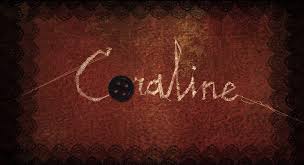
The animated film, 'Coraline', has been given the age rating PG (Parental Guidance), as in the film, there are some scary moments and tense scenes. As it is a little to the horror genre.
This represents that it is suitable for all ages. Parental Guidance is intended. 
This certificate is only used in the cinema, for those who 12 years and over.

When on Video/DVD this is displayed, just like a 12A, it represents 12 and over.

For 15 years and over.
For 18 years of age and over.

For adult works for licensed premises only.
The animated film, 'Coraline', has been given the age rating PG (Parental Guidance), as in the film, there are some scary moments and tense scenes. As it is a little to the horror genre.
Treatment
My documentary is about how my grandparents met, it will be a break down of what they were doing before meeting each other. It dates back at the late 60s when technology isn't what it is now so they explain how they stayed together through the years. In the documentary, you will see old archive of the couple through the years and see them age and how much their relationship has developed.
Of course the theme will be a romantic tale with some humour, audiences of all ages are able to watch this. There will not be any happy music or any fancy romance touches, it will be a simple concept of a conversation between the couple and the interviewer. There won't be any footage as I wanted the audiences to have the choice of watching or listening as it is clear interview with a story.
The length I am aiming for the documentary is at least five minutes as it is a short, sweet story. I don't want the audience to be bored of a long interview about how two people met as it will end up being waffled and will lose that feeling of meeting that person for the first time. It will be shot with some fade in and fade out effects to show a professional essence within it and images would be clear and easy to see, I will be taking pictures up to 720p when taking pictures of the archive. The sound I made sure was to be clear and easy to listen to, with nothing to distract the audiences from listening, it will be HD sound also.
The target audience will be a broad range from children to the elderly. I aimed to make it a all rounder so people of all ages will be able to listen or watch the story. The gender I will be aiming for is mostly females but well as males as in the documentary the story is mostly told by my grandmother so people can hear it through her eyes, for the males, it will be my Granddad telling the story from his point of view but it won't be too much detail.
When it comes to making links and what I have caught from other Documentaries or even films is probably only one. Which is the film 'When Harry Met Sally' at the beginning of the film and in several breaks when the movie jumps one year to the next, a elderly couple is shown and explains of they met. It was an interesting concept as every story they told was different and somewhat unique, you can tell what type of people they were by the few shot minutes also the fact that some of them were months or even years before they all got married. When watching this, I wanted to something similar, an interview with a couple and hear their story before they got married.
I will hope this will be shown in the cinema as a short before a movie as it would do well to show people a love story, a personal one on that note. I feel it would be interesting to watch before a film, especially if the film the audience are going to see is a romantic one. It would be telling a story that is outside all the cliches and predictable measures, instead, it gives a reality view of stort telling and love.
Of course the theme will be a romantic tale with some humour, audiences of all ages are able to watch this. There will not be any happy music or any fancy romance touches, it will be a simple concept of a conversation between the couple and the interviewer. There won't be any footage as I wanted the audiences to have the choice of watching or listening as it is clear interview with a story.
The length I am aiming for the documentary is at least five minutes as it is a short, sweet story. I don't want the audience to be bored of a long interview about how two people met as it will end up being waffled and will lose that feeling of meeting that person for the first time. It will be shot with some fade in and fade out effects to show a professional essence within it and images would be clear and easy to see, I will be taking pictures up to 720p when taking pictures of the archive. The sound I made sure was to be clear and easy to listen to, with nothing to distract the audiences from listening, it will be HD sound also.
The target audience will be a broad range from children to the elderly. I aimed to make it a all rounder so people of all ages will be able to listen or watch the story. The gender I will be aiming for is mostly females but well as males as in the documentary the story is mostly told by my grandmother so people can hear it through her eyes, for the males, it will be my Granddad telling the story from his point of view but it won't be too much detail.
When it comes to making links and what I have caught from other Documentaries or even films is probably only one. Which is the film 'When Harry Met Sally' at the beginning of the film and in several breaks when the movie jumps one year to the next, a elderly couple is shown and explains of they met. It was an interesting concept as every story they told was different and somewhat unique, you can tell what type of people they were by the few shot minutes also the fact that some of them were months or even years before they all got married. When watching this, I wanted to something similar, an interview with a couple and hear their story before they got married.
I will hope this will be shown in the cinema as a short before a movie as it would do well to show people a love story, a personal one on that note. I feel it would be interesting to watch before a film, especially if the film the audience are going to see is a romantic one. It would be telling a story that is outside all the cliches and predictable measures, instead, it gives a reality view of stort telling and love.
Friday, 28 November 2014
Screen Shots Of My Editing


In these images, this me editing the special effects for each image that appears. For each image I add at least two or three special effects to make it look professional, a fade in or fade out, a animation for the image to move and colour change.
This makes my film smooth and easy to watch, I didn't want to make something that was rough and unwatchable.


In this image, I am editing the titles of the documentary. I wanted to make it a simple, easy to look at title. I didn't want anything flashy nor anything eye popping, my aim here was to give the affect that this is professional work and I am aiming to give the affect that this personal and perhaps maybe a little bit serious with a touch of humour. I was going to add music but I couldn't find anything that suited the titles unfortunately, I was going to aim for a simple piano tune, something drive the documentary going but without sound, I guess you could say it was then calm and easy to watch.
Set Designs

This is the set design of my parent's home, comparing to the one below, it is a lot smaller and cramped. However, the couple I was interviewing would be able to sit on the sofa facing the camera forward. In front of them would be a small coffee table with two cups on, giving the affect that they are comfortable in the position they are in. Behind the camera, there would be me and Sian. Sian would be keeping an eye on the camera whilst I ask the questions to the couple. We had an idea to film the couple at the same time with two cameras but with a small amount of space and the last minute change of area, we didn't the time and the space to do it, which of course was another big shame. But the audio was perfect in the area, a microphone wasn't needed.

Here is the rough set design that was set in my cousin's house. The main reason why we didn't end up filming here was because my uncle was having two meetings on the two days we were going to film.
As you can see, it is more spacious and set out similar to a talk show. I was looking forward to film here as the lighting wouldn't be as dark, so the footage would actually be useable and the fact you could experiment with the camera angles in the room as it is so spacious. In the area as well, the plan was that Sian and I would be filming the couple at the same time but in a different angle so during editing we could jump to each shot of the couple's faces and hands. Overall, it is quite a shame that we didn't film in the room but at least we could save the idea for another time.
Thursday, 27 November 2014
Dates, Location and Equipment needed.
The dates that will be needed to film my documentary will be on the 24th and 25th of September, the equipment I will be using are
- A Camera (DLSR)
- Tripod
- Microphone
- Camera charger
- SD card
- Script
- Call Sheet
Crew:
Joshua Vallely (Interviewer) and Sian Tanner (Camera Man)
Location: Great Shelford
Times: 16:30 - 17:30


Wednesday, 26 November 2014
Wednesday, 22 October 2014
THE DANCE - Joshua Vallely Rough Copy Documentary
This is my rough footage of my documentary, personally I believe it went well, however the lighting of the beginning of poor so people couldn't see detail of the couple.
I feedback I was given was mixed, people said it should be just the archive pictures as the footage that was shown was the couple was too blurry and dark. However, the sound and and archive animations were crisp. Another idea was to perhaps re-shoot the couple with better lighting. Overall, I was proud of myself of making it and hope I'll make a better version than the rough.
Thursday, 9 October 2014
Risk Assessment
Hazard: Camera with tripod falling over.
Risk: Tripod with camera falling on someone or the camera becoming damaged.
How likely: Not very likely.
How to minimise hazard: Have someone hold the tripod whilst recording, make sure that if it does fall over, it'll fall on something soft.
Hazard: Someone tripping over the wire.
Risk: Someone tripping over the wire and hurting themselves.
How likely: Quite likely.
How to minimise hazard: Have signs to make sure people don't see what they are treading on. And to perhaps protect the wire.
Hazard: People knocking on the door and ruining the shot.
Risk: Getting a money shot but being interrupted.
How likely: Likely.
How to minimise hazard: Making sure people don't come over until a certain time.
Risk: Tripod with camera falling on someone or the camera becoming damaged.
How likely: Not very likely.
How to minimise hazard: Have someone hold the tripod whilst recording, make sure that if it does fall over, it'll fall on something soft.
Hazard: Someone tripping over the wire.
Risk: Someone tripping over the wire and hurting themselves.
How likely: Quite likely.
How to minimise hazard: Have signs to make sure people don't see what they are treading on. And to perhaps protect the wire.
Hazard: People knocking on the door and ruining the shot.
Risk: Getting a money shot but being interrupted.
How likely: Likely.
How to minimise hazard: Making sure people don't come over until a certain time.
Plan of next week
11th of October
Finish final script. Call up grandparents to organise what days they are free to film. Look through old photos and make sure I find a camera and tripod. When all of this is set, last but not least I will have to make a story board so I know what type of shots I want.
14th of October
Interview Grandad first round cousin's house, go through the risk assessment with him and begin interview. Show Grandad the script to let him know what type of questions I will be asking. Let Grandma know when I'll be interviewing her.
15th of October
Go through the risk assessment with Grandma, show her script so she gets an idea of what to reply with. Interview her and then bring footage back.
16th of October
Take pictures of old photographs and achieves, perhaps even add establishing shots of area.
17th of October
Begin editing in media lessons, edit sound, add music and make sure I have added some shots of the old photographs and establishing shots.
18th of October
Make sure I move some the clips to after effects to add special effects when it comes to establishing shots saying the location. At this point, I will be near finishing and will be starting some of the paper work and ticking off the check list.
Finish final script. Call up grandparents to organise what days they are free to film. Look through old photos and make sure I find a camera and tripod. When all of this is set, last but not least I will have to make a story board so I know what type of shots I want.
14th of October
Interview Grandad first round cousin's house, go through the risk assessment with him and begin interview. Show Grandad the script to let him know what type of questions I will be asking. Let Grandma know when I'll be interviewing her.
15th of October
Go through the risk assessment with Grandma, show her script so she gets an idea of what to reply with. Interview her and then bring footage back.
16th of October
Take pictures of old photographs and achieves, perhaps even add establishing shots of area.
17th of October
Begin editing in media lessons, edit sound, add music and make sure I have added some shots of the old photographs and establishing shots.
18th of October
Make sure I move some the clips to after effects to add special effects when it comes to establishing shots saying the location. At this point, I will be near finishing and will be starting some of the paper work and ticking off the check list.
Tuesday, 7 October 2014
Documentary Script (Rough)
Interview 1: Grandad sits comfortably on the leather sofa, sipping his cup of black tea and watching a documentary on a flat screen television. Local newspapers are seen next to him, giving a basic sense that this man likes to read and loves to learn new things.
INTERVIEWER
You alright?
GRANDAD
Yeah I'm alright, yourself?
INTERVIEWER
Yeah, just asking because we are about to start the interview.
GRANDAD
(Laughs) Okay
INTERVIEWER
So. Lets start from the beginning, what were you doing on the night when you met Grandma?
GrANDAD
Well I was at home, getting ready, putting on my suit and organising a party i was going to have on the weekend.
INTERVIEWER
Do you remember what that party was for?
Grandad
I think it was for my brother, yeah.
INTERVIEWER
And then what happened? Did you get there by car or did you walked?
Grandad
Of course I drove there haha
INTERVIEWER
What was it like arriving there?
Grandad
To be honest with you, it was pretty crowded, I could barely see the parking spaces. It was filled people my age and older if I remember correctly.
INTERVIEWER
Whoa, i can imagine it being a crowded place then, upon arriving, did you see some of your friends?
GRANDAD
Well yeah but they had their girlfriends, I was alone at the time being so I just hung around the food and drinks.
INTERVIEWER
Was it good food?
Grandad
(Laughs) No, not at all, tasted like shit to be honest.
INTERVIEWER
(Laughs) Fair enough, then what happened?
GranDAD
Then I saw your grandmother.
InTERVIEWER
Do you remember what you felt?
Grandad
(Describes the scene and what he felt)
INTERVIEWER
Did you go up to her and ask for a dance?
GranDAD
Yeah, I was nervous, shaking uncontrollably in fact. She was the most beautiful woman I have ever seen.
Int. COUSIN'S HOUSE - DAY
Grandma is seen sitting comfortably on a chair with her cup of tea, camera sets up, camera comforts Grandma by asking if she wants more tea, she denies the offer and makes herself comfortable.
Interviewer
What were you doing before the valentines dance?
Grandma
I was helping my mother bring in the shopping and getting ready I suppose.
Interviewer
Do you remember what you were wearing?
Grandma
A silk, pink dress, yes.
InterVIEWER
Fair enough and how did you get to the dance?
GrANDMA
I think my mother drove me there with my father, like your parents, they told me to be safe and just enjoy myself.
Interviewer
Fair enough, what were you feeling at the time?
GrANDMA
Nervous, a little scared but quite excited. I wasn't really a party person mind you.
InterVIEWER
Could you describe what the atmosphere was like? Were there a lot of people?
Grandma
I believe so, I knew a great number of people but all of them were busy with their partners.
Interviewer
Well then, I guess we both know what happens next.
Grandma
(Laughs) Indeed. I saw him alone next to the food and drink, he was alone, at first I didn't take notice, I thought he was waiting for a date but no, he randomly came up to me and asked if I wanted to dance with him.
InterVIEWER
And of course you said yes?
Grandma
Not exactly, I asked if he could buy me a drink first
INTERVIEWER
(Laughs) Fair enough, and what did you feel when you saw or even talked to him?
GraNDMA
(Describes of what she felt at the
time)
Int. COUSIN'S HOUSE - DAY
The married couple are seen sitting together happily on seats and are holding hands.
INTERVIEWER
So, thats the story?
GraNDAD and grandma
(Laughs)
GranDAD
Yeah.
InTERVIEWER
How long have you two been married?
GranDma
53 years ... Yeah, 53.
Friday, 26 September 2014
Shooting Schedule/Shot List
Activity: Film my Grandad on the couch with newspapers, giving the sense he is a man who likes to read.
Documents Needed: Send a email to Grandad about the questions, so he has an idea of what to say and feels comfortable of whats coming.
Date & Location: 6th October, Cousin's House, Afternoon.
Equipment: Tripod, Mic and Camera (Maybe two)
Activity: Look for old pictures of the couple, see if they have a photo book.
Documents Needed: Risk assessment
Date & Location: 7th October, Cousin's house, Morning
Equipment: Camera
Activity: Film my Grandma on a chair, with a book and a cup of tea.
Documents Needed: An email or a small script of what to say, to feel comfortable of the questions and to know what to reply with.
Date & Location: 8th October, Cousin's house, Afternoon
Equipment: Two cameras, tripod and mic
Activity: Interview Mum and perhaps Uncle to hear their views of the story
Documents Needed: A small script of what I might be asking them, so they get the idea of what to reply with.
First shot will be a mid shot of a photo book, slowly zooming into an individual photograph.
Mid shot for both interviews, from head to waist, also showing a clear view of the background.
Establishing shot of the church hall.
First shot will be a mid shot of a photo book, slowly zooming into an individual photograph.
Mid shot for both interviews, from head to waist, also showing a clear view of the background.
Establishing shot of the church hall.
Monday, 22 September 2014
L3 19/09/14
The difference between story and narrative is how the plot is told. The story itself is what it is about as a whole thing, the narrative however, is the multiple ways of telling the story.
A 3 act narrative is a simple beginning, middle and end structure. For
**The act classic Hollywood structure is the structure of the film; it starts with the exposition, which means introducing the key characters of the film and the landscapes, the start of the plot. The development then occurs, which gives the audience a more in depth of the characters and locations, this involves mostly character development and when the plot thickens. Then it is the complication, the turn around, what stops the characters on their tracks and makes a problem for their goal in the film. After that, its the climax, this is when the problem is solved, an outcome of what the characters did to overcome the problem they faced. Finally, its the resolution, the conclusion and (hopefully) a happy ending, the characters have solved their problems and have nothing else to worry about.
A linear narrative is when the plot is told in a simple measure, following the characters from start to finish which hardly any complications in the way. An example of this would be The Avengers(Joss Wheadon 2012), it introduces the main characters, plot thickens, making all the main characters to work together to solve the problem and then a happy ending.
However, non-linear is when the plot is explained in a different way. Instead of start to finish it could start with a simple from finish to start, or even middle, finish and start, either way, it is a non-linear plot. For example, the film Pulp Fiction* (Quentin Tarantino 1995) the plot is told through different narratives and in different orders in time.
 *
*Of course, the film follows the five act structure however, the scenes are mixed in a non-linear way. The Exposition, where it introducers the characters Hunny Bunny and Pumpkin and then Vincent and Jules, at this point of time in the film, at this point you only know a little about the films plot. The Development is then introduced with more characters, such as Mia. During the beginning of the chapter, you get to know a bit more about Vincent, as you find out he takes drugs and is quite a softie when it comes to talking to woman. Next is the complication, where Mia has a drug overdose which turns the tables around, making Vincent panic with fright. He takes Mia to his friends house. When the climax kicks in, Mia is saved from harm by a adrenaline shot, Vincent is no longer worried and the problem is solved. The Resolution however, is not a happy ending, Vincent is shot dead in a bathroom by a character named Butch and is left there, this of course is the end of the line for Vincent.
 **
**Friday, 19 September 2014
The Pitch + Pitch Feedback
Working title of your project:
Here are some ideas: (Love at first sight, an accidental dance, The beginning, A Dance, The Dance.)
Log line:
A story about how my grandma and grandad met for the first time at a valentines dance.
Synopsis:
A love story about how a couple met at a valentines school dance.
Feedback
A lot of people said it was 'cute' and 'interesting', some said not a lot of documentaries tell the story of how two real people met and what they went through to stay together so it will be interesting to watch and learn how they stayed together.
Feedback
A lot of people said it was 'cute' and 'interesting', some said not a lot of documentaries tell the story of how two real people met and what they went through to stay together so it will be interesting to watch and learn how they stayed together.
Subscribe to:
Posts (Atom)